
You search for AI agents for your store. Google’s top results give you vendor lists and a forum thread by someone who builds agents. Nobody says what an agent would need from your store, or adds up what you would pay each month.
I read the 15 results Google ranks first for “AI agents for ecommerce”. Eleven came from software companies selling AI tools, three from agencies or consultancies. Not one article mentioned WordPress, and not one explained how a voice agent is billed.
I build managed AI voice and chat agents for WordPress stores. I lead every deployment personally, and my team runs the infrastructure. So I sell what this guide describes. It names no vendor as the best, and it prints no prices, mine included.
Key takeaways
- AI agents for ecommerce answer customers, follow up and do back-office work. Each job needs different access to your store.
- An agent answers and looks things up. A person should decide anything with money in it.
- The bill has four parts: the build, a platform fee, usage and the time someone spends running the agent.
- What counts as one billed unit differs by vendor, and that definition decides your bill.
What are AI agents for ecommerce?
An AI agent for ecommerce is software that talks to people about your store and takes actions for you. It reads your products, orders and policies. Then it answers a customer, looks something up, or starts a task.
That last part is what makes it an agent. A chatbot follows a script or answers from a fixed set of replies. An agent decides which step to take next, within the rules you give it. Our guide to the best AI customer service agents for WooCommerce stores also covers that difference.
Most stores are still early. The US Census Bureau found that around 14% of retail businesses currently use AI. That is below the national rate of about 20% across all businesses (19.8% in early May 2026).[1] The survey asks about any use of AI, not only agents.
In practice, an agent works through tools you switch on: a product search, an order lookup, a handover to your team. What it can do is the sum of those tools, so ask any vendor for the list.
Bottom line: an AI agent for ecommerce reads your store’s data and acts on it, inside rules you set.
Agents for your store, or agents for your buyers?
The phrase now means two different things. On 11 of the 15 results Google ranks first, the phrase means agents that work for the store. They answer, sell and run tasks. Four of the 15 give as much space, or more, to agents that shop for the buyer, and 8 mention them. A shopper’s own AI finds products, compares them and may even buy.
That second meaning is often called agentic commerce. Google Cloud describes an era “where AI agents act on behalf of both consumers and businesses”.[2] Yotpo, which sells marketing software to stores, says brands “need to be visible to the external agents that recommend products”.[3]
For a store, that is a data job, not a support job. A shopping agent can only recommend what it can read about your products. Names, sizes, stock and policies have to be clear and current on the page.
The two meanings meet in one place: your product data. Clean data helps your own agent answer correctly, and it helps a shopper’s agent find you. This guide covers the first meaning, the agents that work for you.
Bottom line: agentic commerce is about being found by your buyers’ AI. This guide is about the AI that works for you.
Which jobs can AI agents for ecommerce do?
Almost every one of the 15 results lists jobs, but the lists lean one way. The chart shows which: how often each job appeared across the 15 pages I read.
Google US results for “ai agents for ecommerce” as Ubersuggest recorded them on 13 August 2026, read on 5 October 2026. Our own count.
The jobs fall into five kinds. Each needs different access to your store, and each goes wrong in its own way.
| The job | Who it talks to | What it needs from your store | Where it goes wrong |
|---|---|---|---|
| Answering before they buy | Shoppers | Products, stock, sizes, policies | Out-of-date product data |
| Order and delivery questions | Customers | Read access to orders and tracking | Promising a delivery date |
| Returns and refund requests | Customers | Your returns policy and the order | Deciding the refund itself |
| Following up | People who left | Contact details and consent | Calling without consent |
| Back-office work | You and your team | Write access to the catalogue | Changing data nobody checks |
Answering questions before they buy
This is the job closest to a sale. A shopper asks whether a product suits them, whether it is in stock, or how returns work. Gorgias, which sells a help desk, says about 1 in 9 support enquiries on its platform is a pre-purchase question.[4]
The agent needs your live catalogue, not a copy from launch day. On our demo store, the agent was asked for a moisturiser for dry skin, and whether it was in stock. It named one product, said it was in stock and offered to add it to the cart.
Order status and delivery questions
“Where is my order?” is the question every store knows. In a 2023 article, Gorgias put it at 18% of incoming requests on average.[5] An agent can read the order and the tracking number and answer straight away. Our guide to customer support for ecommerce covers who answers the questions an agent cannot.
The risk is the promise. An agent should give a delivery range you set, never a date it cannot keep.
Returns and refund requests
An agent can explain your returns policy, check the order and take the request. Asked how long a customer has to return a product, our demo agent gave the store’s 30-day rule for unopened products. For an opened product with a problem, it pointed the customer to the team. The refund decision itself should stay with a person.
Following up with people who did not buy
Some agents contact people who left: a shopper who abandoned a cart, someone whose enquiry never became an order, a past customer. This only works if you have their contact details. On the phone, it also needs their consent.
In the US, the FCC ruled in 2024 that AI-generated voices count as artificial voices under the Telephone Consumer Protection Act (TCPA). Such calls need the prior express consent of the person called, unless an exemption applies.[6] Check the rules where your customers live before any agent calls them.
Back-office work
Agents can draft product descriptions, flag low stock or suggest price changes. These agents talk to you, not your customers. They need write access to your catalogue, so start them on suggestions you approve.
Bottom line: pick the job first, then check the agent can reach only what that job needs.
Can an AI agent answer your store's phone?
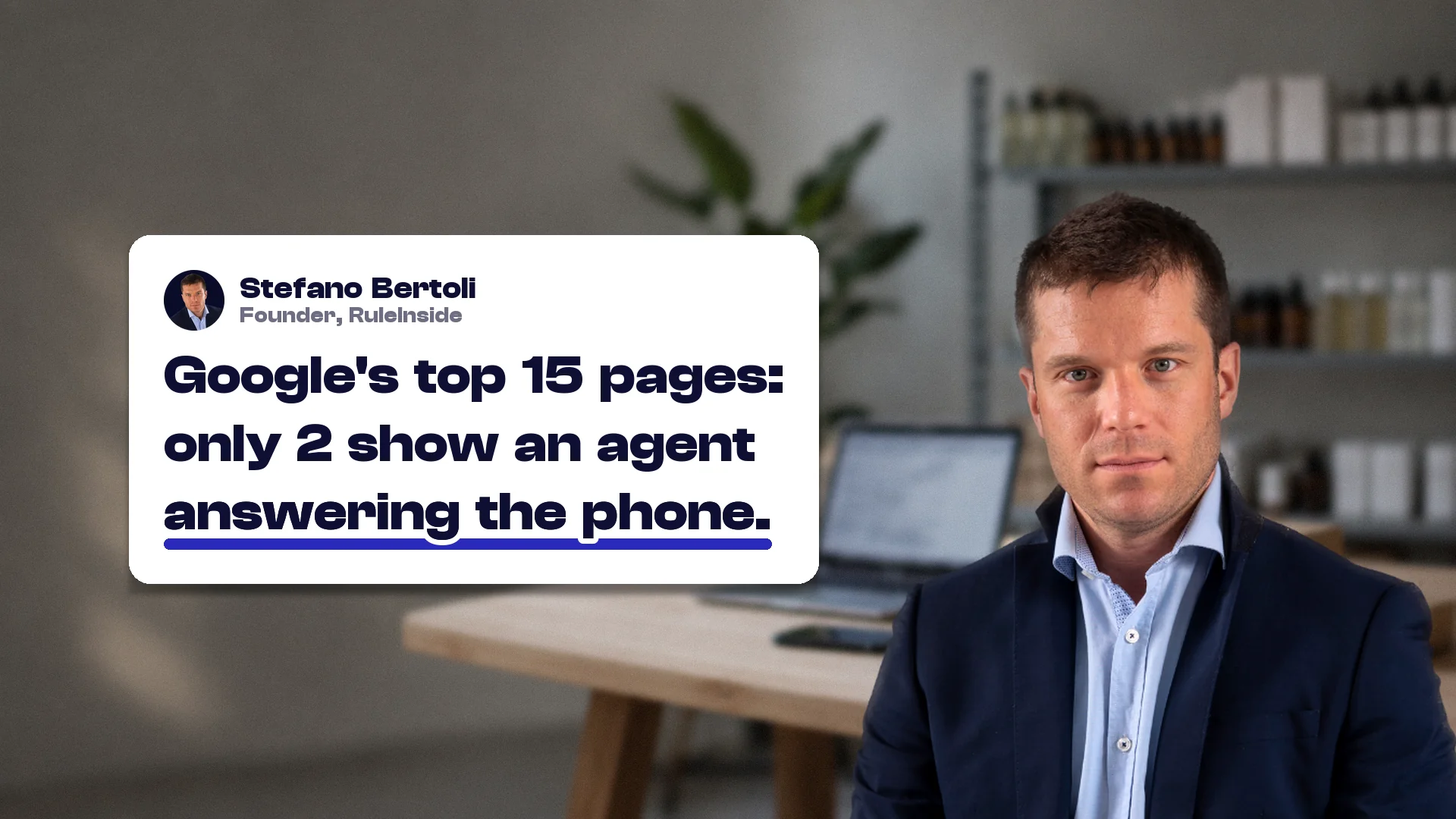
Yes, and it is the job Google’s top results skip. Of Google’s top 15 pages, only 2 show an AI agent that can answer the phone. Both were written for large retailers.
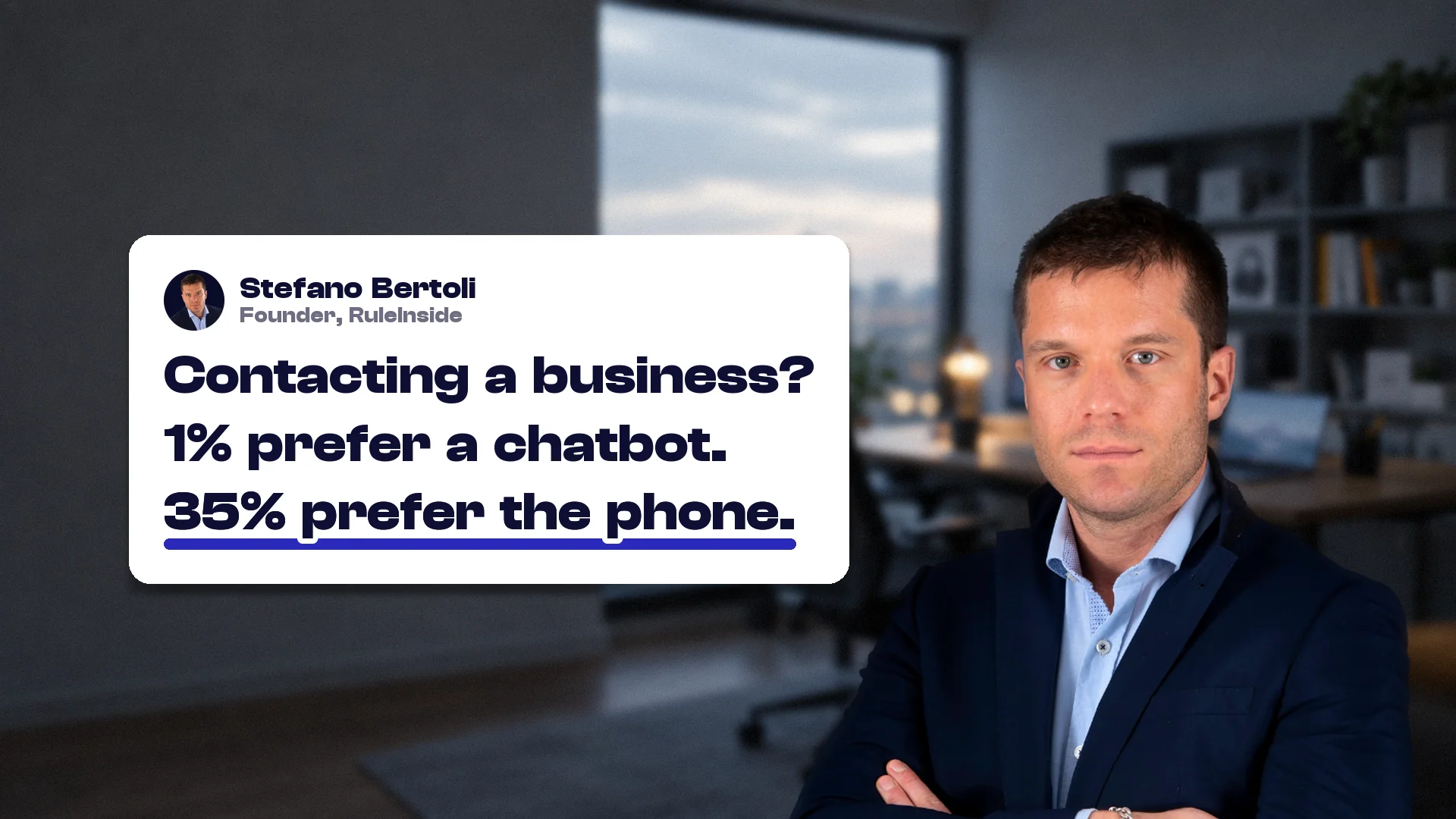
Your customers still call. A YouGov survey found that “Nearly 70% of Americans tend to use phone support, yet only 35% prefer it”. Only 1% prefer chatbots.[7]
Voice AI agents for ecommerce do the same jobs as chat agents: product questions, order status and returns. They read the same store data. The difference is time. The caller is waiting on the line, so the agent has to find the answer while it talks.
It is often billed differently, too: per minute of call time, though some vendors bill a call per outcome. The cost section below shows how that minute is built. Calling customers back is a separate job, and in the US it usually needs their consent first.
Our page on the AI voice agent that answers your store’s phone shows what ours does on a call.
Bottom line: if your customers phone you, a chat-only agent leaves those calls unanswered.
How does an AI agent connect to a WooCommerce store?
Not one of the 15 pages on AI agents for ecommerce explained it, yet it decides what the agent can do. Across the 15 pages Google ranks first, Shopify came up 98 times and WooCommerce 23 times. Sixteen of those 23 came from one page written for agencies.
One route is the WooCommerce REST API. You create a key in your store, and the agent uses it to reach your data. WooCommerce’s own documentation says each set of keys “is linked to a WordPress user on your site”.[8]
When you create a key, you choose its permission level. The Read level “allows the application to retrieve data from your store”. The Write level “allows the application to create and update data in your store”. Read/Write allows both.[8]
That choice is your first safety rule. An agent that answers product and order questions needs read access. An agent that changes orders or your catalogue needs write access, and a person checking its changes.
After you create a key, the same screen shows a Revoke Key link. If you stop using an agent, revoke its key. If the agent installs a plugin instead, ask what the plugin can read and change.
Bottom line: give an agent the narrowest access that does its job, and revoke that access when you stop using the agent.
What do AI agents for ecommerce get wrong?
Only 4 of the 15 pages Google ranks first admitted that agents give wrong answers. Five presented it as a benefit that an agent acts on money on its own, such as issuing refunds.
Three failures matter most for a store.
- A wrong answer is your answer. In 2024, a Canadian tribunal held Air Canada responsible for what its website chatbot told a customer.[9] Our guide to managed AI for online stores explains the case and who should fix such errors.
- A decision about money. An agent can take a refund request and pass it on. It should not decide the refund, a discount or an exception.
- Old data. An agent is only as good as what it reads. A changed policy or a sold-out product turns a right answer wrong overnight.
Projects also fail on cost. Gartner predicts that over 40% of agentic AI projects will be canceled by the end of 2027. It names “escalating costs” first among the reasons.[10] That is a forecast, not a measurement of stores.
Two habits cover all three: someone keeps the data current, and there is a clear handover to a person. The agent answers and looks things up. A person decides anything with money in it, and the customer reaches that person with the conversation attached.
Bottom line: judge an agent by what it does when it should not answer, not only by what it answers.
What do AI agents for ecommerce cost to run?
Eight of the 15 pages talked about what AI agents for ecommerce cost. None added it up for one store. The cost has four parts, and each one is charged differently.
The build. Connecting your store, writing the agent’s rules and testing it. Some vendors leave this to you; others charge for it once.
The platform. A monthly plan, sometimes priced per seat, meaning each person on your support team.
Usage. What the agent does: resolutions, conversations, minutes or tokens. This is the part that grows with your store.
Running it. Someone reads the conversations, fixes wrong answers and keeps the data current.
How usage is billed
Vendors count usage in different units. These are the units the vendors’ own help pages describe.
| Billing unit | What counts as one | Examples |
|---|---|---|
| Per resolution or outcome | A question the agent resolves, by the vendor’s own rule; Intercom’s outcome also counts some handoffs | Intercom Fin, Zendesk |
| Per automated interaction | A ticket the agent handles alone, on top of a ticket fee | Gorgias |
| Per conversation | The agent’s first reply in a thread, solved or not | Tidio Lyro |
| Per minute | Each minute of a call, built from several billed parts | Retell, Vapi, ElevenLabs |
| Per phone number | A monthly fee for the line, plus call minutes | Twilio |
| Per token | The text the AI model reads and writes | OpenAI |
Intercom charges per teammate on its plan, then for what you use.[11] Gorgias charges a fee per ticket, plus an outcome fee for interactions its AI Agent automates.[12] OpenAI prices its models per million tokens, with input and output billed separately.[13]
What counts as one unit decides the bill
Two vendors can both say “per resolution” and count very different things. Three examples from their own help pages:
- Intercom: if a customer leaves after the agent’s answer without asking for more, that counts as a resolution. You are charged for it.[14]
- Zendesk: since 18 May 2026, only resolutions that an AI model confirms as resolved are drawn from your allowance.[15]
- Tidio: a conversation counts the first time Lyro replies in a new thread, and a thread closes after 15 minutes of inactivity.[16]
Ask every vendor the same question: what exactly counts as one? Then ask what happens to units you do not use.
How a voice agent is billed
Not one of the 15 pages explained it. A voice agent is often billed per minute, and the price of that minute is made up of several parts. Vapi lists a per-minute hosting fee, plus the model, voice, transcriber and telephony costs for each call.[17] Its voice part is billed per character of spoken text.[18]
Vendors also treat silence differently. Retell bills the whole call, because its speech engine keeps listening during silence.[19] ElevenLabs discounts silences longer than 10 seconds, and passes the AI model’s cost through separately.[20] The phone line is its own bill: Twilio charges per minute for calls, plus a monthly fee for each number.[21]
How to estimate your own usage
Usage grows with your orders, so start from your own volume. Gorgias publishes support tickets per 100 orders by product category, measured on brands with about $10M a year in sales.[22]
Worked example: support tickets a month for a store with 1,000 orders
- Electronics, about 46 per 100 orders
- about 460 support tickets
- Food and drink, about 20 per 100 orders
- about 200 support tickets
- Your store
- your orders × your own rate
Gorgias's figures by category, a vendor source. Multiply by the vendor's price per unit, add the platform fee, and plan for your busiest weeks.
One agency in Google’s top results puts the last point well: “Model costs for peak weeks, not only an average month”.[23] A sale or a delivery delay can make one week far busier than the rest.
How I charge, so you can compare. On the managed plans, RuleInside bills a one-off setup fee per agent and a monthly plan with a pool of minutes. Self-serve has no setup fee. Every call uses minutes and every chat uses half a minute, whether or not it leads to a sale. The figures are on our pricing page.
Bottom line: price an agent on your own volume, in the vendor’s own unit. Then add the hours someone spends running it.
Who runs the agent after launch?
AI agents for ecommerce need running after launch, and the vendors’ own instructions show it. Gorgias tells new customers to review at least 10 tickets its AI Agent handled in the first week.[24] Intercom suggests a feedback loop so your team can flag wrong answers and fill gaps.[25] Its Optimize feature reviews the conversations Fin cannot answer, then “provides weekly suggestions to fix gaps”.[25]
“Maintenance is where trust and recurring revenue live.”
That thread has the most estimated clicks of any of the 15 results, and its author sells agent builds. He is right about the upkeep. One agency guide in Google’s top results says agents do not fit “Teams with no owner for policy updates”.[23]
Customers notice the gaps too. In a Gartner survey, 87% of customers said a company using AI must offer a way to reach a human agent.[26]
So someone has to own three jobs: keeping the data current, reading the conversations and answering the handovers. If you run the agent yourself, those hours are yours. If someone else runs it, check that they really do the work. Our guide to managed AI for online stores shows that work week to week.
Bottom line: name the person who runs the agent before it goes live.
Which job should your store start with?
Seven of the 15 pages on AI agents for ecommerce recommend or show starting small, with one job or a pilot. I agree, and the order matters.
Start with answering. Every visitor who asks a question can be answered while they are still on your site. You do not need their email or phone number to do it. Following up only reaches the people who left their details, and on the phone only those who consented.
Read a month of your emails. Count the questions that repeat: stock, sizes, delivery, returns, order status.
Pick the one that repeats most. That is the agent’s first job.
Give it only what that job needs. Read access to products and orders, not the power to refund.
Set the handover. Decide which questions go to a person, and check they arrive with the conversation.
Read the first conversations yourself. Fix the source of each wrong answer, not just the reply.
Add the next job once the first runs without surprises.
Where the agent answers matters too. If your customers phone you, a chat agent leaves the calls unanswered. If they mostly email, start there.
Bottom line: start with the question your store answers most, then add jobs one at a time.
Check any AI agent before you buy, mine included
Six questions test any AI agent for ecommerce before you buy. They cover how it is billed, what it reads and changes, and who watches it. The questions come from this guide’s cost and risk sections. Ask them in any sales call, including mine. Vendors of AI agents for ecommerce are easier to hold to their word when they answer in writing.
What exactly counts as one billed unit? And does a handover to a person count?
What happens to units I do not use? On some plans, you lose them at the end of the month.
What does it read from WooCommerce? Products, stock, orders, tracking: ask for the list.
What can it change? It should take refund requests, not decide them.
What does it say when it does not know? Ask to see a real handover.
Who reads the conversations after launch? You, or the provider, and how often.
Our free AI Agent Buyer’s Guide has 13 questions to ask any vendor. It scores my own agent on the same 13 points.
Bottom line: the vendor who answers these plainly is the one worth a trial.

Try it free · your next step
Talk to an AI Agent on a Real WooCommerce Store
Velàri Skincare is our demo store. Its AI agent answers from the store’s own products and policies.
- Ask which product suits your skin, and whether it is in stock.
- Ask how returns work.
- Talk to it, or type.
- See how it tells you it is an AI before it answers.
It is our own demo shop, not a client's store. The chat asks you to accept recording before it starts.
Try the Demo StoreQuestions Store Owners Ask About AI Agents for Ecommerce
AI agents for ecommerce are software that talks to customers or your team and takes actions for your store. They read your products, orders and policies, then answer, look things up or start a task.
Most of them work for the store: support, sales follow-up and back-office jobs. The term has a second meaning, agentic commerce: AI that shops for the buyer.
A chatbot follows a script or picks from fixed replies. An AI agent decides its next step within your rules, and can look up an order or start a task.
The line is blurry in marketing, so ask what the tool can read and do in your store. Our guide to the best AI customer service agents compares them one by one.
They answer product and stock questions, give order status, take return requests and follow up with people who did not buy. Some draft product descriptions or flag low stock for you.
On the 15 pages Google ranks first for AI agents for ecommerce, returns and order status were the jobs named most. Phone calls were named least, on 2 of 15 pages.
The cost has four parts: the build, a platform fee, usage and the time to run it. Usage is billed per resolution, conversation, minute or token, depending on the vendor.
Start from your own volume. Count your monthly support conversations, multiply by the vendor’s price per unit, add the platform fee, then allow for your busiest weeks.
It depends on the vendor. At Intercom, if a customer leaves after the agent’s answer without asking for more, that counts as a resolution. You are charged for it.
At Zendesk, only resolutions an AI model confirms as resolved are billed, since May 2026. Ask every vendor for its exact rule in writing.
Some do. Across the 15 pages Google ranks first for AI agents for ecommerce, Shopify came up 98 times and WooCommerce 23 times. Not one page explained how an agent connects to a WooCommerce store.
Ask what the agent reads from WooCommerce: products, stock, orders and tracking. Ask whether it needs a plugin, and who installs and updates it.
Yes. A voice agent answers calls and does the same jobs as a chat agent: product questions, order status and returns. It is usually billed per minute of call time.
Calls the agent makes are different. In the US, AI voice calls need the called person’s prior express consent, unless an exemption applies. That follows a 2024 FCC ruling.
Some vendors sell agents that refund on their own. It is safer to let the agent take the request and pass it to a person who decides.
A wrong refund is your money, and a wrong promise is your store’s promise. Keep refunds, discounts and exceptions with your team.
It can take the repeated questions off their desk. It cannot replace the person who decides refunds, handles an angry customer or fixes a wrong answer.
A Gartner poll found 95% of 163 customer service leaders planned to retain human agents.[27] Plan for a person behind the agent.
Agentic commerce is shopping done by the buyer’s own AI agent. The agent searches, compares products and may complete the purchase for the shopper.
For a store, it raises a different question: can those agents read your product data? It is separate from the agents that work for your store.

How I wrote this guide
Who wrote it. I did. I run RuleInside, which sells AI agents to WordPress stores, so I sell what this guide describes.
The top-ranking pages. I read all 15 pages Google ranks first for “ai agents for ecommerce” in the US. Ubersuggest recorded them on 13 August 2026. One, ada.cx, blocked the fetch, so I read its 2025 archived copy. The Reddit thread came from its public feed and an archive. I counted which jobs, costs and risks each one names.
Billing rules. Each comes from the vendor’s own help or pricing page, opened on 5 October 2026. I left out every price on purpose.
The demo. Our demo store’s agent was asked two questions by automated text chat on 5 October 2026. This guide reports what it answered.
Updates. I revise this guide when a source changes. The date at the top shows the last real update.
Sources
- U.S. Census Bureau, “Large Firms With at Least 20 Employees Biggest AI Users”, 26 May 2026. Read the source
- Google Cloud Blog, “Agentic commerce is here: How retailers can prepare for the new shopping era”, 7 October 2025. Read the source
- Yotpo, “AI Agents For Ecommerce: The Full Guide”, updated 27 July 2026. Read the source
- Gorgias Ecom Lab, “Pre-purchase speed is a revenue lever. Most brands treat it as a cost.”, 28 May 2026. Read the source
- Gorgias, “What’s the secret to reducing WISMO requests?”, updated 13 November 2023. Read the source
- Federal Communications Commission, Declaratory Ruling FCC 24-17, released 8 February 2024. Read the source
- YouGov, “How Americans prefer to contact businesses for customer service”, 13 March 2025. Read the source
- WooCommerce, “WooCommerce REST API Documentation”, updated 19 May 2026. Read the source
- Moffatt v. Air Canada, 2024 BCCRT 149, British Columbia Civil Resolution Tribunal, 14 February 2024. Read the source
- Gartner, “Gartner Predicts Over 40% of Agentic AI Projects Will Be Canceled by End of 2027”, 25 June 2025. Read the source
- Intercom, “Intercom Pricing”. Read the source
- Gorgias, “How you’re billed for using Gorgias”. Read the source
- OpenAI, “Pricing”, OpenAI API documentation. Read the source
- Intercom Help, “Fin AI Agent outcomes”. Read the source
- Zendesk help, “About automated resolution tiers”. Read the source
- Tidio, “The Lyro AI agent limit”, updated 28 January 2026. Read the source
- Vapi, “Pricing and Success Packages”. Read the source
- Vapi, “How voice agent component costs and estimates work”. Read the source
- Retell AI, “AI Phone Agent Pricing”. Read the source
- ElevenLabs, “How much does ElevenAgents cost?”. Read the source
- Twilio, “Programmable Voice Pricing in United States”. Read the source
- Gorgias Ecom Lab, “Stop benchmarking against the average”, 1 April 2026. Read the source
- Lexogrine, “Best AI Agent for Ecommerce in 2026”. Read the source
- Gorgias, “Set up and go live with AI Agent”. Read the source
- Intercom Help, “Top ten ways to optimize Fin”. Read the source
- Gartner, “Gartner Survey Finds 87% of Customers Say Companies Using GenAI for Customer Service Must Provide Access to a Human Agent”, 4 August 2026. Read the source
- Gartner, “Gartner Predicts 50% of Organizations Will Abandon Plans to Reduce Customer Service Workforce Due to AI”, 10 June 2025. Read the source
On this page